Politics
PM LECORNU HONOURS YOUTH AGAINST DISCRIMINATION ANTISEMITISM & RACISM
20 YEARS AFTER HALIMI’S TORTURE & DEATH
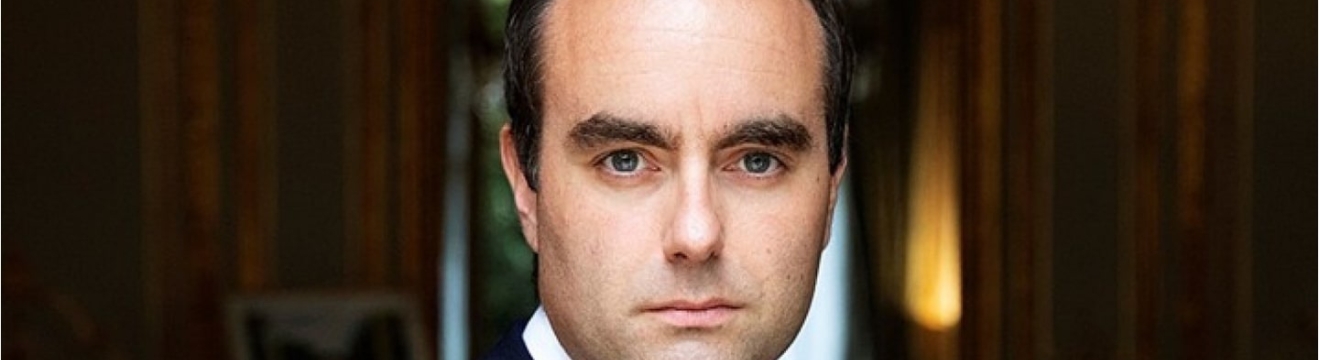
french PM Sebastien Lecorni (Source: French government)
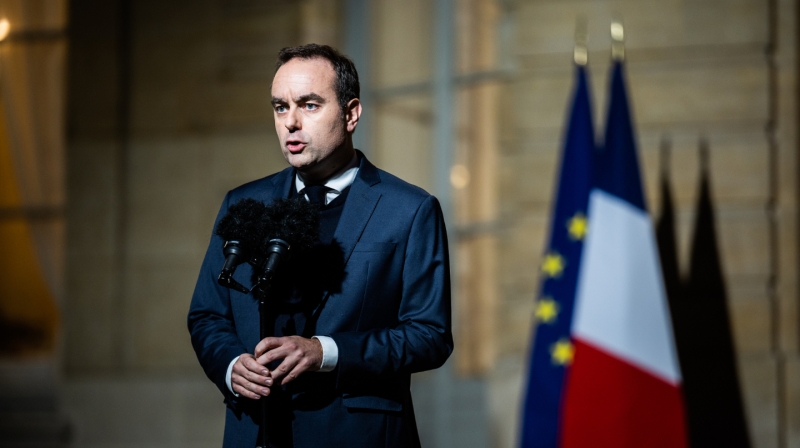
french PM Sebastien Lecornu
(Source: French Government)
(Source: French Government)
I have been covering the Ilan Halimi Prize ceremony for several years, and until now photographers and reporters were generally allowed to take pictures quite freely. In 2026, by contrast, the press was admitted in a very small, tightly controlled pool, and journalists, including myself, were explicitly instructed not to take photos or videos, even as many guests and officials freely filmed and took selfies with their smartphones. Readers will therefore have to make do without images accompanying this report, a somewhat paradoxical situation in a democracy where photography and video are usually the most concrete proof that a reporter was physically present on the scene.
TWENTY YEARS AFTER ILAN HALIMI’s BARBARIAN DEATH, MATIGNON HONOURS MEMORY, YOUTH AND A STILL INCOMPLETE BATTLE AGAINST DISCRIMINATION
In 2006, 23 year old Ilan Halimi was kidnapped in Paris by the so called “Barbarian gang”, led by Youssouf Fofana. Lured into a trap, he was held captive, humiliated and tortured for 24 days solely because he was Jewish, before being found dying near a railway line and succumbing to his injuries soon afterwards. The antisemitic murder sent a shockwave through France and became a reference point for debates on hatred, racism and the failure to protect French Jews.
In the years that followed, Socialist MP Jerome Guedj proposed the creation of the Ilan Halimi Prize, a national award for projects by young people fighting racism and antisemitism. The first editions were hosted by the Justice Ministry at the Chancellerie. Since the time of Prime Minister Elisabeth Borne, and now under Prime Minister Sebastien Lecornu, the ceremony has been moved to Hôtel de Matignon, symbolically placing this fight at the heart of the head of government’s responsibilities. (Source DILCRAH, French Government)
In 2006, 23 year old Ilan Halimi was kidnapped in Paris by the so called “Barbarian gang”, led by Youssouf Fofana. Lured into a trap, he was held captive, humiliated and tortured for 24 days solely because he was Jewish, before being found dying near a railway line and succumbing to his injuries soon afterwards. The antisemitic murder sent a shockwave through France and became a reference point for debates on hatred, racism and the failure to protect French Jews.
In the years that followed, Socialist MP Jerome Guedj proposed the creation of the Ilan Halimi Prize, a national award for projects by young people fighting racism and antisemitism. The first editions were hosted by the Justice Ministry at the Chancellerie. Since the time of Prime Minister Elisabeth Borne, and now under Prime Minister Sebastien Lecornu, the ceremony has been moved to Hôtel de Matignon, symbolically placing this fight at the heart of the head of government’s responsibilities. (Source DILCRAH, French Government)
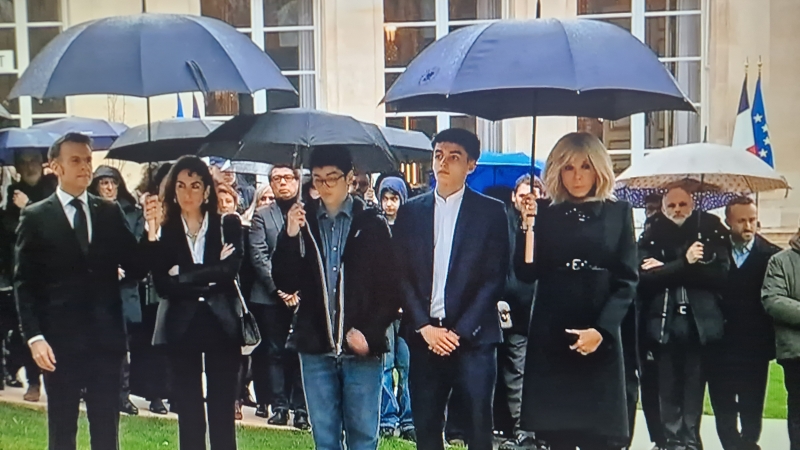
President Macron Planting oak tree for Ilan Halimi, ELysee
Source: C news Tv Caption
Source: C news Tv Caption
FROM THE ELYSEE OAK TREE TO MATIGNON’S COUNCIL ROOM
The day began at the Elysee Palace, where President Emmanuel Macron led a national tribute in the presence of Ilan Halimi’s family and representatives of the Jewish community. In his address, he denounced “the hydra of antisemitism” and recalled that “each time a Jew is attacked, it is the Republic itself that is targeted”. President Macron announced a bill to make any openly antisemitic statement by an elected official grounds for ineligibility and reaffirmed that “antisemitism is not an opinion, it is a crime”.(Source French Presidency, Elysee)
To mark the 20th anniversary, the president planted an oak tree in the gardens of the Elysée as a living memorial to Ilan , a choice rich in symbolism, since “Ilan” in Hebrew can be translated as “tree”. This oak is meant both as a landmark for the Ilan Halimi memorial and as a response to the repeated acts of vandalism committed in recent years against commemorative trees and plaques across the country.
The day began at the Elysee Palace, where President Emmanuel Macron led a national tribute in the presence of Ilan Halimi’s family and representatives of the Jewish community. In his address, he denounced “the hydra of antisemitism” and recalled that “each time a Jew is attacked, it is the Republic itself that is targeted”. President Macron announced a bill to make any openly antisemitic statement by an elected official grounds for ineligibility and reaffirmed that “antisemitism is not an opinion, it is a crime”.(Source French Presidency, Elysee)
To mark the 20th anniversary, the president planted an oak tree in the gardens of the Elysée as a living memorial to Ilan , a choice rich in symbolism, since “Ilan” in Hebrew can be translated as “tree”. This oak is meant both as a landmark for the Ilan Halimi memorial and as a response to the repeated acts of vandalism committed in recent years against commemorative trees and plaques across the country.
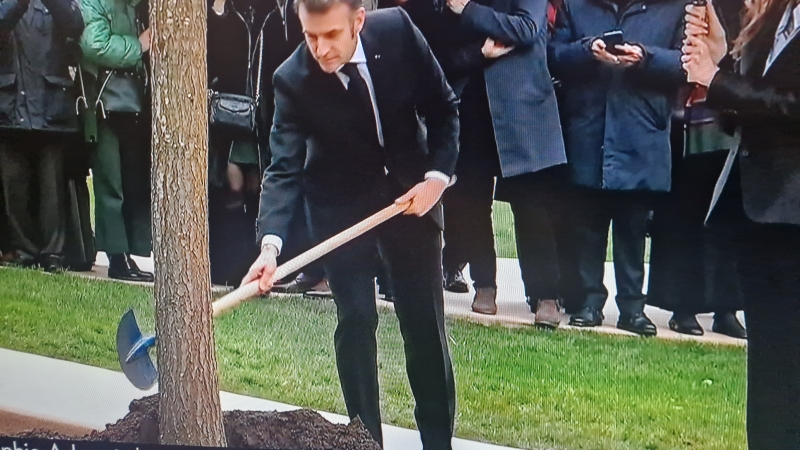
President Macron Oak tree for Ilan Halimi
Source: C news Tv Caption
Source: C news Tv Caption
In the afternoon, the focus shifted to Matignon. Around 170 guests, comprising of scholars, students, teachers, association leaders and officials, gathered in the Council Room, the historic hall where the Matignon Agreements of 1936 were signed, a place already associated with the struggle against fascism and social injustice. Prime Minister Sebastien Lecornu, joined by ministers of Eduation including Aurore Berge and representatives of the DILCRAH, presided over the 2026 Ilan Halimi Prize ceremony. (Source DILCRAH, French Government)
A PRIME MINISTER SPEAKING WITHOUT NOTES, AS A “HUMANIST”
Unlike many formal government speeches, Lecornu chose to speak without a written script. He addressed the audience in a direct, almost intimate tone, explaining that this event “matters to him deeply”. He recalled that he was 20 years old when Ilan Halimi was murdered and working as a parliamentary assistant, and still remembers the shock the crime caused within the political class, a generation which believed it had definitively turned the page on the worst forms of antisemitic violence.
The Prime Minister evoked his own family history, mentioning parents he described as “righteous people” who had helped Jews during the German occupation in the Second World War. He said he sees himself first as a humanist, and that hosting the Ilan Halimi Prize at Matignon is not just a protocol duty but a personal commitment.
Unlike many formal government speeches, Lecornu chose to speak without a written script. He addressed the audience in a direct, almost intimate tone, explaining that this event “matters to him deeply”. He recalled that he was 20 years old when Ilan Halimi was murdered and working as a parliamentary assistant, and still remembers the shock the crime caused within the political class, a generation which believed it had definitively turned the page on the worst forms of antisemitic violence.
The Prime Minister evoked his own family history, mentioning parents he described as “righteous people” who had helped Jews during the German occupation in the Second World War. He said he sees himself first as a humanist, and that hosting the Ilan Halimi Prize at Matignon is not just a protocol duty but a personal commitment.
By dedicating part of his afternoon to these young laureates, he wanted to send a clear signal: the Republic expects its youth to take part in the fight against antisemitism, racism and all forms of discrimination – and it recognises and values those who do.
Addressing the students, he insisted that “to each generation corresponds a combat” and that theirs is to resist the trivialisation of racist and antisemitic speech, particularly on social networks. He urged them not to let “those who shout the loudest and do the most harm” win the battle of ideas by making others believe that defenders of equality and dignity are a minority.
Addressing the students, he insisted that “to each generation corresponds a combat” and that theirs is to resist the trivialisation of racist and antisemitic speech, particularly on social networks. He urged them not to let “those who shout the loudest and do the most harm” win the battle of ideas by making others believe that defenders of equality and dignity are a minority.
A CEREMONY ROOTED IN MEMORY AND CIVIC COURAGE
The ceremony itself was structured around the projects rewarded by the 2026 Ilan Halimi Prize. Co organised by the offices of the Prime Minister and the Minister for Equality between Women and Men and by the DILCRAH, it honoured five intitiatives chosen from 115 submitted across mainland France and the overseas territories. (Source DILCRAH, French Government)
• In Hérault, the “Maison de l’enfant” received an award for a project on Roma and Traveller memory, highlighting the persecution of Tzigane communities and their erasure from official narratives.
• A group of pupils in Doubs produced a short film, “Passeurs de fraternité”, imagining what France might look like if it were governed by antisemitism or racism – a dystopia meant to prompt debate in classrooms.
• The student prize went to the “Illuminate to Engage” collective at Aix Marseille University, which documented over 3,400 cases of online hate in five months targeting Arabs, Blacks, Jews and others, including Holocaust denial and worked with LICRA to train students in recognising and reporting racist content on X, Instagram, Facebook and TikTok.
The ceremony itself was structured around the projects rewarded by the 2026 Ilan Halimi Prize. Co organised by the offices of the Prime Minister and the Minister for Equality between Women and Men and by the DILCRAH, it honoured five intitiatives chosen from 115 submitted across mainland France and the overseas territories. (Source DILCRAH, French Government)
• In Hérault, the “Maison de l’enfant” received an award for a project on Roma and Traveller memory, highlighting the persecution of Tzigane communities and their erasure from official narratives.
• A group of pupils in Doubs produced a short film, “Passeurs de fraternité”, imagining what France might look like if it were governed by antisemitism or racism – a dystopia meant to prompt debate in classrooms.
• The student prize went to the “Illuminate to Engage” collective at Aix Marseille University, which documented over 3,400 cases of online hate in five months targeting Arabs, Blacks, Jews and others, including Holocaust denial and worked with LICRA to train students in recognising and reporting racist content on X, Instagram, Facebook and TikTok.
• The lycée Sainte Geneviève des Bois in Essonne, close to where Ilan’s body was found in 2006, was rewarded for its project “Honneur aux Justes”, honouring people who saved Jews and resisted persecution, and linking that history to today’s responsibilities.
The Grand Prize, unanimously chosen by the jury went to a high school in Tours for a performance entitled “20 ans, l’âge brisé” (“20, the broken age”). The students staged scenes of exclusion, hostile glances, everyday verbal brutality and more overt violence to show how “barbaric words can destroy lives”. In their short speech, they said they wanted to act against racism and antisemitism by exposing the mechanisms that isolate, humiliate and, in the worst cases, kill. (Source French Government)
The Grand Prize, unanimously chosen by the jury went to a high school in Tours for a performance entitled “20 ans, l’âge brisé” (“20, the broken age”). The students staged scenes of exclusion, hostile glances, everyday verbal brutality and more overt violence to show how “barbaric words can destroy lives”. In their short speech, they said they wanted to act against racism and antisemitism by exposing the mechanisms that isolate, humiliate and, in the worst cases, kill. (Source French Government)
STUDENTS REFUSING OBLIVION & NAMING ALL HATRED
One of the most striking interventions came from a young laureate who, in a letter style text, addressed “Dear Dany” and spoke directly about Ilan Halimi. She recalled that he had been murdered “because he was Jewish” and that, for a long time, many in France had refused to name the antisemitic nature of the crime, as if this aggravating circumstance were embarrassing. She pointed out that some of the perpetrators, themselves from minorities and victims of racism, had developed a form of anti Jewish hatred which, in their minds, seemed to lessen their own guilt, a mechanism she found particularly disturbing.
One of the most striking interventions came from a young laureate who, in a letter style text, addressed “Dear Dany” and spoke directly about Ilan Halimi. She recalled that he had been murdered “because he was Jewish” and that, for a long time, many in France had refused to name the antisemitic nature of the crime, as if this aggravating circumstance were embarrassing. She pointed out that some of the perpetrators, themselves from minorities and victims of racism, had developed a form of anti Jewish hatred which, in their minds, seemed to lessen their own guilt, a mechanism she found particularly disturbing.
She also listed other attacks in France: elderly Jewish women thrown from windows, worshippers attacked near synagogues, students excluded from group chats or school events, memorial trees cut down in the name of “just a prank”, and complaints dismissed as “not really antisemitic”. She thanked the Prime Minister for giving national visibility, twenty years later, to the crime suffered by a young man whose “only fault was to be Jewish”.
Another student reminded the audience that the promise made to Ilan, to allow him to spend a simple evening with his girlfriend, had not been kept, and that “barbarity has shown antisemites all over the world that Jews can be massacred again”. She linked the Halimi case to more recent massacres abroad and to the attacks in France, insisting that there can be no “small commitment” when it comes to defending the Republic’s values.
Another student reminded the audience that the promise made to Ilan, to allow him to spend a simple evening with his girlfriend, had not been kept, and that “barbarity has shown antisemites all over the world that Jews can be massacred again”. She linked the Halimi case to more recent massacres abroad and to the attacks in France, insisting that there can be no “small commitment” when it comes to defending the Republic’s values.
A BLIND SPOT: DISABILITY AND THE FIRST DISCRIMINATION IN FRANCE
Amid these powerful speeches, your notes highlight an important blind spot. Among all the prize winners and officials only one young man, from the “Illuminate to Engage” collective explicitly used the word : “Inclusion” hats off ! As he referred to discrimination over disability. His project included an exhibition called “Eclipse”, whose aim was to make the invisible visible, particularly people with disabilities, and to show how online hatred also targets them.
Yet disability is the leading ground of referral to the French Defender of Rights when it comes to discrimination, ahead of ethnic origin and religion, and people with disabilities represent roughly 17% of the French Population. In a day devoted to fighting racism and antisemitism, and more broadly to denouncing hate, this dimension was mentioned only once, and not taken up by the main speakers. Neither the president in the morning nor the Prime Minister in the afternoon explicitly addressed discrimination against people with disabilities, even though they are among the most exposed and vulnerable in everyday life.
Amid these powerful speeches, your notes highlight an important blind spot. Among all the prize winners and officials only one young man, from the “Illuminate to Engage” collective explicitly used the word : “Inclusion” hats off ! As he referred to discrimination over disability. His project included an exhibition called “Eclipse”, whose aim was to make the invisible visible, particularly people with disabilities, and to show how online hatred also targets them.
Yet disability is the leading ground of referral to the French Defender of Rights when it comes to discrimination, ahead of ethnic origin and religion, and people with disabilities represent roughly 17% of the French Population. In a day devoted to fighting racism and antisemitism, and more broadly to denouncing hate, this dimension was mentioned only once, and not taken up by the main speakers. Neither the president in the morning nor the Prime Minister in the afternoon explicitly addressed discrimination against people with disabilities, even though they are among the most exposed and vulnerable in everyday life.
This does not undermine the legitimacy of focusing on antisemitism and racism in the context of Ilan Halimi’s memory. Yet it raises a clear question: can a Republic that seeks to fight all forms of hatred afford to treat disability discrimination as a marginal issue, when it is statistically the most frequent? Including disability more systematically in these ceremonies would not dilute the message about antisemitism; it would reinforce the idea that no category of citizens should be left at the edge of the fight for equality.
HOPE IN YOUTH AND A BROADER DEFINITION OF “NEVER AGAIN”
Leaving Matignon at the end of the ceremony, what remains most strongly is the faces and words of the students. From suburban high schools to major universities, they have chosen to spend weeks working on memory, on artistic creation, on legal tools and on pedagogy, rather than retreating into cynicism. They speak about Ilan Halimi, Roma families, Muslims, Blacks, Arabs and Jews targeted by hate and a few of them, still too few, speak about disability and inclusion.
Twenty years after a young man was tortured to death because he was Jewish, the Republic is still searching for the right vocabulary and the right alliances to turn “never again” into concrete protections for all. The oak tree planted at the Elysée and the prizes awarded at Matignon will not, by themselves, stop antisemitism, racism or ableism. But they can encourage a generation to see itself as responsible for defending the rule of law and human dignity on every front.
Leaving Matignon at the end of the ceremony, what remains most strongly is the faces and words of the students. From suburban high schools to major universities, they have chosen to spend weeks working on memory, on artistic creation, on legal tools and on pedagogy, rather than retreating into cynicism. They speak about Ilan Halimi, Roma families, Muslims, Blacks, Arabs and Jews targeted by hate and a few of them, still too few, speak about disability and inclusion.
Twenty years after a young man was tortured to death because he was Jewish, the Republic is still searching for the right vocabulary and the right alliances to turn “never again” into concrete protections for all. The oak tree planted at the Elysée and the prizes awarded at Matignon will not, by themselves, stop antisemitism, racism or ableism. But they can encourage a generation to see itself as responsible for defending the rule of law and human dignity on every front.
As the years go by and new data, testimonies and official initiatives emerge, we will keep following these questions closely and return to them in future articles, both to reflect the facts as they are established and to analyse what they reveal about France’s political climate and about the way its youth chooses to confront racism, antisemitism, disability discrimination and all other forms of exclusion.
WHEN 17% OF THE POPULATION DISAPPEAR FROM THE SCRIPT: DISABILITY, THE 1st DISCRIMINATION LEFT OUT OF THE ILAN HALIMI CEREMONY
Yet one striking blind spot overshadowed this otherwise powerful afternoon. From the first welcome at the entrance to the final group photo, not a single ministerial speech at Matignon mentioned disability, even though disability has, for years, been the first ground of discrimination reported to the French Defender of Rights. In its 2023 annual activity report, the institution notes that around one in five discrimination complaints (about 21%) concern situations of disability, ahead of origin and state of health, and several syntheses stress that roughly 17% of people in France live with a disability.(Source defenseur des droits,)
Among all the laureates, only one student, from the “Illuminate to Engage” collective, explicitly used the word “inclusion” and referred to the invisibility of disabled people in both hate speech and public ...To be continued.../
Yet one striking blind spot overshadowed this otherwise powerful afternoon. From the first welcome at the entrance to the final group photo, not a single ministerial speech at Matignon mentioned disability, even though disability has, for years, been the first ground of discrimination reported to the French Defender of Rights. In its 2023 annual activity report, the institution notes that around one in five discrimination complaints (about 21%) concern situations of disability, ahead of origin and state of health, and several syntheses stress that roughly 17% of people in France live with a disability.(Source defenseur des droits,)
Among all the laureates, only one student, from the “Illuminate to Engage” collective, explicitly used the word “inclusion” and referred to the invisibility of disabled people in both hate speech and public ...To be continued.../
Liability for this article lies with the author, who also holds the copyright. Editorial content from USPA may be quoted on other websites as long as the quote comprises no more than 5% of the entire text, is marked as such and the source is named (via hyperlink).